
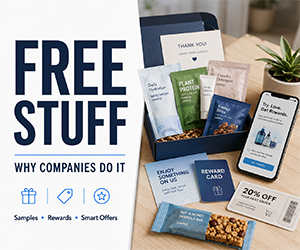
Why Companies Give Away Free Stuff - And How to Use It Without Getting Played
Free samples can feel suspicious at first. Why would a company give away skincare, snacks, coffee, pet treats, coupons, household products, birthday gifts, or trial items for nothing?
The answer is simple: free stuff is marketing. Companies use free samples, giveaways, product testing, coupons, rewards, and trial offers to get products into your hands before you spend money. If you like what you try, you are more likely to remember the brand and consider buying it later.
That does not make free samples bad. It just means you should understand the exchange. Companies get attention, feedback, app signups, email subscribers, reviews, and possible future customers. You get a chance to try something before paying full price. When the offer is real, both sides can win.
ad$enseFree Samples Make New Products Feel Less Risky
Trying something new always carries a small risk. Maybe the moisturizer feels greasy. Maybe the coffee tastes weak. Maybe the pet treat gets ignored like it personally offended your dog. Maybe the snack looks better on the package than it tastes in real life.
A free sample removes some of that pressure. You can try the product first, and the company gets a real chance to prove it is worth buying. That is why samples work so well for beauty, food, drinks, baby products, pet items, household supplies, and personal care.
The “Free Gift” Effect Is Real
When a company gives you something useful for free, it creates a small positive feeling. You are not required to buy anything, but you may remember the brand more warmly because you received something from it.
That is part of why birthday gifts, beauty samples, restaurant rewards, and free trial items work so well. The brand gets attention. You get a small win. If the product is good, the relationship starts in a better place than another ad yelling from your screen.
Companies Want Real Feedback
Free products are also useful for testing. Before a company pushes a product harder, it may want to know how real people react to it. Does the formula feel right? Does the snack taste good? Is the package confusing? Would people buy it again?
That is where product testing comes in. Some programs send products to people who agree to try them and share honest feedback. This helps companies improve products, collect reviews, and understand what customers actually think outside a polished ad campaign.
Find Product Testing Opportunities
Samples Help New Products Get Attention
A new product has a problem: people do not know it yet. A company can spend money on ads, but a sample lets someone actually touch, taste, smell, use, or test the product.
That experience is stronger than a regular ad. If you try a new coffee, lotion, snack, fragrance, or pet treat and like it, the product becomes familiar. That can make a future purchase much easier.
🔍 Pro-Tip: Want to see this strategy in action? Search current offers for Free Samples, Product Testing, Free Beauty Samples, or Free Food Samples.
Free Stuff Also Creates Word-of-Mouth
People talk about good free offers. They share links, mention samples to friends, post quick reviews, or tell someone when a product is surprisingly good.
That matters because a real recommendation often feels more believable than a polished ad. A free sample can turn one small product trial into a review, a social post, a conversation, or a future sale.
What Companies Get From Free Offers
Free stuff is not random kindness with a marketing budget. A company may be trying to launch a product, get feedback, grow an email list, increase app signups, drive store visits, build reviews, support a retailer promotion, or encourage a future purchase.
- Attention: A free offer makes people stop and look.
- Trial: You get to test the product before buying full size.
- Feedback: Product testing helps companies learn what real people think.
- Trust: A good sample can make a brand feel more familiar.
- Reviews and sharing: Samples can lead to posts, reviews, referrals, and word-of-mouth.
- Future sales: If you like the product, you may buy it later.
What You Get From Free Offers
For you, free stuff can be useful when you stay selective. A sample lets you test before spending money. That can help you avoid bad purchases and discover products you may actually want to buy later.
- Beauty samples: Test skincare, makeup, fragrance, hair care, and body care before buying full size.
- Food samples: Try snacks, drinks, coffee, sweets, and grocery products before adding them to your cart.
- Pet samples: See whether your dog or cat actually likes a treat or food sample.
- Baby and household items: Try useful products before committing to a full-size purchase.
- Coupons and rewards: Lower the cost if you decide to buy later.
Where to Find Real Free Stuff
The easiest way to start is with updated freebie pages. Free samples can run out quickly, so fresh offers are much better than old links from random posts that had their moment three years ago and refuse to retire.
Current Free Stuff and Samples
Start here for updated free samples, product offers, giveaways, coupons, and limited-time free stuff.
Free Beauty, Food, and Household Offers
These categories are worth checking often because companies regularly use samples to introduce new products.
Free Beauty Samples | Free Food Offers | Free Household Samples
How to Use Free Offers Without Getting Burned
Free samples are useful, but only when you understand the exchange. Sometimes you provide an email address. Sometimes you answer a short survey. Sometimes you join a free rewards program. Sometimes the offer is really a trial with renewal terms hiding in the fine print.
- Use a separate email. Keep sample confirmations, coupons, and brand emails away from your main inbox.
- Read the terms. Check whether the offer requires a survey, app, account, purchase, receipt upload, or trial.
- Move quickly on good samples. Popular offers can run out fast.
- Give honest feedback if asked. Product testing works best when companies receive useful real-world comments.
- Buy only if it makes sense. A sample is a test, not a command to purchase the full-size product.
How to Avoid Fake Free Sample Offers
Because free stuff is popular, fake offers exist. A real offer should explain what you get, who provides it, and what steps are required. If the page hides the basics, that is not mystery. That is a warning sign.
- Do not pay surprise fees. Be careful with “free sample” offers that ask for shipping, handling, processing, verification, or activation fees.
- Watch for credit card traps. Some offers are really free trials that renew later.
- Check the sponsor. Use known brands, trusted offer pages, official websites, or reputable rewards platforms.
- Skip impossible promises. A free full-size product for every visitor with no clear sponsor is usually suspicious.
- Be careful on social media. Fake pages often copy brand logos and message people with fake winner claims.
- Protect your payment details. A simple free sample should not need your credit card number.
More Free Stuff and Savings
If you want to find current offers and learn more ways to save, these pages can help:
The Simple Idea
Companies give away free stuff because it helps them lower buying risk, get attention, collect feedback, build trust, and turn curious shoppers into future customers.
For you, that can be a smart way to try before you buy. Use trusted sources, read the terms, avoid suspicious fees, and focus on samples you will actually use. That is how free stuff stays useful instead of turning into inbox clutter with a tracking number.