
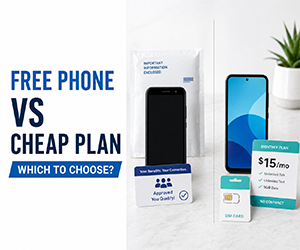
Free Government Phone vs. Cheap Phone Plan: Which One Should You Choose?
A phone plan does not have to drain your budget every month. If your bill feels too high, there are two practical paths to check: a Lifeline-supported phone plan or a low-cost private phone plan.
The right choice depends on your situation. A Lifeline option may help if you qualify and need the lowest possible monthly cost. A cheap private plan may be better if you want more data, more flexibility, or want to use your own unlocked phone.
ad$enseWhat People Mean by a Free Government Phone
When people say “free government phone,” they are usually talking about Lifeline-supported service. Lifeline is a federal program that helps lower the monthly cost of phone or internet service for eligible households.
Depending on your location, eligibility, and provider, a Lifeline carrier may offer a $0 monthly phone plan, and some providers may include a basic phone. The exact phone, data amount, and plan details can vary, so it is important to check the current offer before you apply.
Explore Current Free Phone Offers
Option 1: Lifeline-Supported Phone Service
This option is best if your main goal is to keep your monthly phone cost as low as possible. It can be useful for calls, texts, emergency contact, basic browsing, job searches, appointments, school communication, and staying connected.
Choose This If You Need the Lowest Monthly Cost
Lifeline-supported service can make sense if you qualify based on income or participation in eligible assistance programs. For many people, the biggest benefit is simple: keeping essential phone service active without a large monthly bill.
Best for: Calling, texting, light internet use, basic apps, emergency contact, and people who need help lowering monthly phone costs.
Good to know: Lifeline is usually limited to one discount per household, and you may need to recertify your eligibility each year.
What to Watch With Lifeline Plans
Lifeline can be very helpful, but it may not feel like a full unlimited smartphone plan. Some plans may include limited high-speed data, basic phones, or slower speeds after you use your included data.
This does not make the program bad. It just means you should treat it as an essential connectivity option, not always as a heavy streaming or gaming plan.
Important: Lifeline Is Not the Same as ACP
Do not confuse Lifeline with the Affordable Connectivity Program, also known as ACP. ACP ended in 2024 and is no longer providing monthly broadband discounts. Lifeline is a separate program and remains the main federal option to check for phone or internet service discounts.
ad$enseOption 2: A Cheap Private Phone Plan
A cheap private phone plan can be the better choice if you do not qualify for Lifeline or if you want more data and flexibility. Many budget carriers use major wireless networks, but sell service at lower monthly prices.
Choose This If You Need More Data or More Control
Low-cost private plans can be a strong fit if you use your phone for maps, streaming, social media, video calls, work apps, school apps, or hotspot data. You usually pay monthly, but you may get more speed, more data, and more plan choices.
Best for: Heavier data use, unlocked phones, families comparing carriers, and people who want more plan options.
Good to know: These plans are not free. You usually need to bring or buy your own phone and pay the monthly plan cost yourself.
Discover Affordable Phone and Plan Options
How to Decide Quickly
Here is the simple way to think about it:
- Choose Lifeline if you qualify and your top priority is getting basic phone service at the lowest possible monthly cost.
- Choose a cheap private plan if you need more high-speed data, want to use your own unlocked phone, or do not qualify for Lifeline.
- Compare both if you are not sure. The best choice is the one that gives you enough service without making you overpay.
Tips Before You Apply or Switch
- Check coverage first. A cheap plan is only useful if the network works well where you live, work, and travel.
- Read the data details. Look for how much high-speed data is included and what happens after you use it.
- Check phone compatibility. If you bring your own phone, make sure it is unlocked and works with the carrier.
- Watch for upfront costs. Some low-cost plans require payment in advance or a multi-month purchase.
- Be careful with fake ACP offers. ACP has ended, so avoid websites still asking for personal information for ACP enrollment.
A Smart Way to Use a Basic Plan
If you choose a Lifeline-supported plan with limited data, use Wi-Fi whenever possible. Download maps, podcasts, videos, app updates, and large files while connected to home, school, library, work, or other trusted Wi-Fi.
This helps save mobile data for the moments when you really need it away from Wi-Fi.
More Ways to Lower Your Phone Costs
If you are trying to cut your phone bill or find a device for less, these pages may help:
The Simple Idea
A Lifeline-supported phone plan is usually the best place to start if you qualify and need basic service for the lowest possible cost. A cheap private plan is usually better if you need more data, more speed, and more flexibility.
Start by checking whether you qualify for Lifeline. Then compare private budget plans if you need more than basic service. The goal is not to get the flashiest plan. The goal is to stay connected without overpaying every month.